
Most medical professionals have no idea that people with ME/CFS are so angry about the standard of medical treatment that they receive – or don’t receive – that they hold protests about it.
On 8 March the campaigning group Chronic Collaboration held a protest in front of parliament, brandishing banners and placards with slogans such as “Don’t Let ME Die”. ME stands for myalgic encephalomyelitis, the disease that is also known as myalgic encephalomyelitis/chronic fatigue syndrome (ME/CFS).
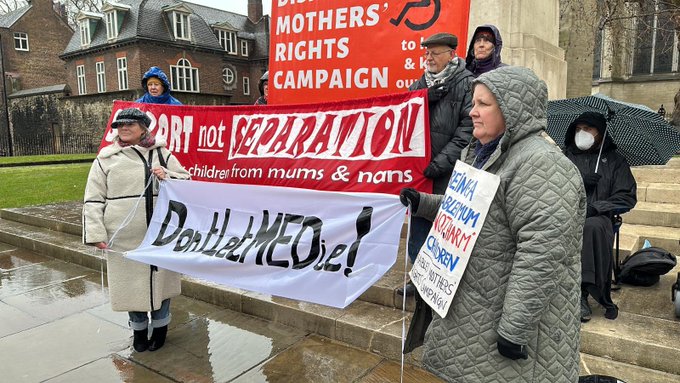
Another slogan was “Support not Separation”, a reference to the practice of misdiagnosing children who in fact have ME/CFS with fabricated or induced illness (FII), which results in the children being taken into care.
The protesters’ demands included a review of how (or if) the NICE guidelines on ME/CFS are being implemented by NHS England, Health Education England, and the GMC.
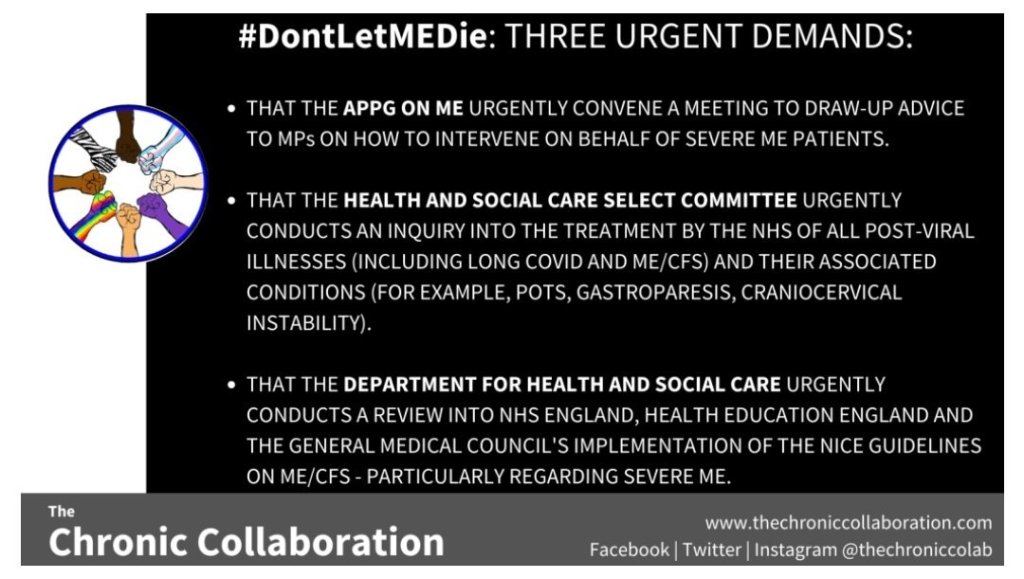
Since most people with ME/CFS are unable to attend a protest in person – many are too ill to leave their homes – the live protest was accompanied by a virtual protest on Twitter.
The protest took place on International Womens’ Day, and some protesters took the opportunity to point out that about three-quarters of ME/CFS sufferers are women, and that this has contributed to the stigma surrounding the disease. In the 1970s there was a school of thought which held that ME/CFS was in fact hysteria – the main ‘evidence’ for this was that most sufferers were women. The terminology has changed, but that stigma continues today.
Many tweets condemned the tendency of doctors lacking training in ME/CFS to ‘psychologize’ the condition – that is, to falsely attribute the symptoms to behavioural problems, essentially accusing the patients of making themselves sick, and refusing medical treatment on this basis.
One protester tweeted the part of the NICE guidelines on ME/CFS which recognizes that ME/CFS sufferers often experience prejudice and disbelief.
Another online protester pointed out that the official NHS website page on ME/CFS gives an inaccurate and minimizing picture of the condition, and fails to include its hallmark symptom, post-exertional symptom exacerbation (PESE), also known as post-exertional malaise (PEM).
Many of the #DontLetMEDie tweets mentioned that patients with very severe ME/CFS sometimes end up in hospital, malnourished and needing to be tube-fed because they have become too weak to swallow – but, all too often, hospital doctors refuse tube feeding, or delay it. This happens because most doctors have received no training on ME/CFS, don’t understand the condition, and therefore they simply don’t believe that the patient is so ill as to be unable to take in food.
Many tweets also mentioned long Covid. Some percentage – one estimate puts it at 30% – of long Covid sufferers meet the diagnostic criteria for ME/CFS, and these patients experience all of the same medical neglect as other ME/CFS sufferers. If anything, they are even more vulnerable, as some doctors are (wrongly) reluctant to diagnose ME/CFS in a patient who already has a long Covid diagnosis. Thus these patients miss out on the measure of medical care and protection against harmful treatments that can come with a diagnosis of ME/CFS.
Two days after the protest took place, the organizers sent a tweet acknowledging that those who attended the protest in person had ‘crashed’, or were experiencing post-exertional malaise (PEM), an increase in illness severity lasting days or weeks, resulting from having pushed past their energy limits.
There were several tweets remembering members of the ME community who have died from the disease.
And there were calls for an inquiry into these deaths.
It is undoubtedly uncomfortable for medical professionals to read tweets like these. Yet it is important for doctors and other clinicians to have some idea of how this condition is experienced, from the patients’ perspectives.

 ME/CFS Medical Education Campaign